
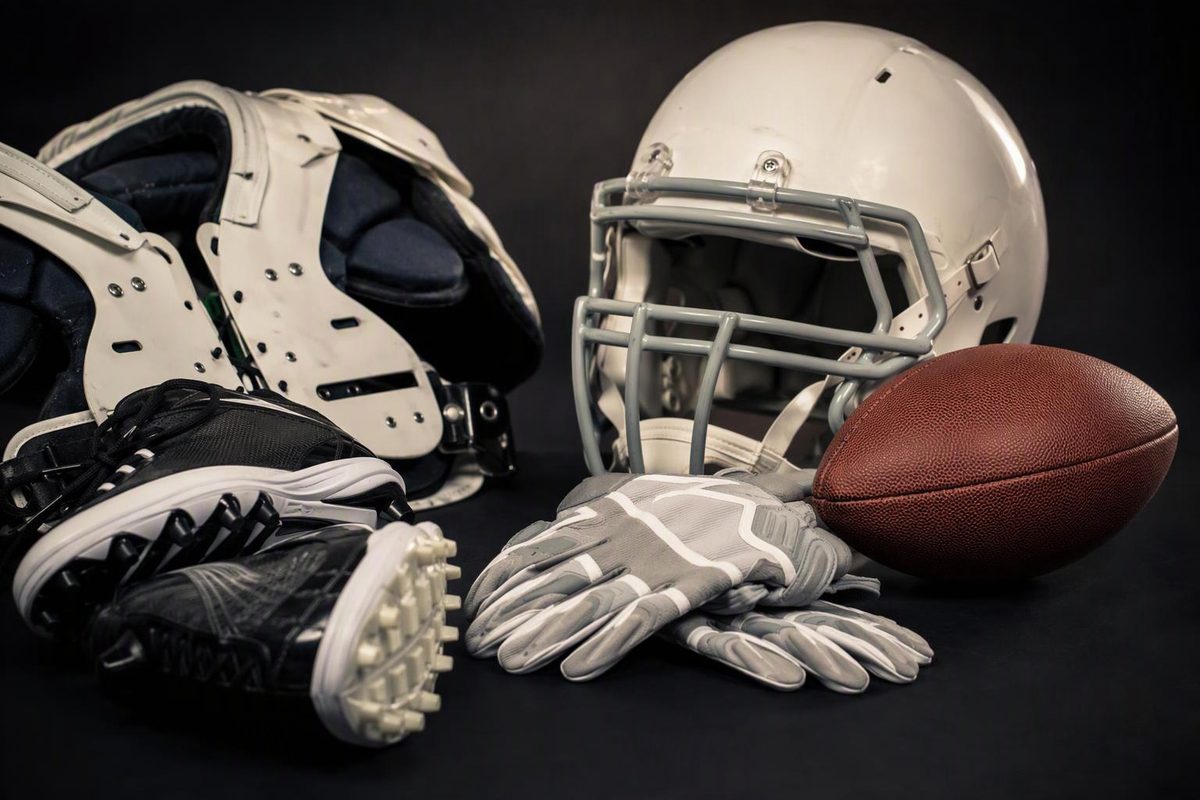
A fullback (FB) is an offensive running back in American football who commonly leads the way for another runner, protects the quarterback and also carries or catches the ball. In a traditional two-back offense, blocking is central to the job—but the playbook determines how much the fullback runs or receives. The NFL’s position definition describes the fullback as an extra blocker who can also run and catch.
For a player learning the position, start with three questions: Where do I align? Who is my assignment? What path gets me there? “Block somebody” is not a usable instruction.
Where does a fullback line up?
In a traditional I formation, the quarterback, fullback and tailback line up in a straight line. The fullback is behind the quarterback but ahead of the tailback, positioned to enter the running lane first. In an offset I, the fullback moves to either side of that central alignment. See this I-formation overview.
A roster label does not lock a player into one spot. For an NFL example, the 49ers’ 2018 profile of Kyle Juszczyk documents receiving plays on which their fullback aligned in the slot and at tight end.
On film, record the player’s actual location before deciding what he will do.
Fullback vs. halfback, tight end and H-back
The halfback, also called the tailback, is commonly the primary runner in a traditional two-back set. The fullback commonly supplies the lead block. Both belong to the offensive backfield; the distinction is their usual assignment, not whether they can carry the ball. The NFL glossary describes this relationship.
A tight end can perform overlapping blocking and receiving jobs, but may align on the line of scrimmage beside a tackle. H-back is a staff-dependent label often used for an off-ball tight end or movable blocking-and-receiving player. The same NFL glossary describes an H-back as a blocker and receiver aligned behind the line, in contrast to an on-line tight end. Confirm your staff’s terminology rather than assuming “H-back” and “fullback” are interchangeable.
The fullback’s main assignments
Lead blocking
On Iso, the offense isolates a linebacker against the lead blocker. The fullback enters the assigned lane and blocks that linebacker; the tailback follows and responds to the block’s leverage. The exact target and path depend on the front and blocking rules. This Iso breakdown shows different fullback assignments against odd and even fronts.
Coaching cue: “Find your assigned linebacker through the called lane.”
Observable correction: If the fullback drifts toward the first defender he sees, pause the rep and have him identify his target before repeating his first two steps. Use your staff’s gap terminology so the path is clear.
Pass protection
The fullback may stay in to block rather than release into a route—a responsibility included in Throw Deep Publishing’s fullback guide. Teach the protection’s identification and adjustment rules—not a blanket instruction to pick up any unblocked defender.
Checkpoint: Can the player name his responsibility before the snap and explain whether he stays in or releases?
Running and receiving
A fullback can take a quick handoff on a dive or release into the flat, the short outside area near the sideline. The fullback guide describes both uses.
The blocking-first definition also has a scheme exception: in a Flexbone option offense, the fullback or B-back is a central interior running threat. Triple Option Football Academy’s Flexbone explanation emphasizes establishing that dive threat.
A six-minute assignment walkthrough
Use this no-contact teaching period with a quarterback, fullback, tailback, football and cones marking your installed alignments and running lane.
- Two minutes: lead path. Walk four reps, two each direction. A coach represents the assigned linebacker. The fullback identifies him, takes the installed path and stops one yard short—no collision.
- Two minutes: protection. Walk four reps against two defensive looks represented by coaches or cones. Before moving, the fullback names his protection responsibility and stays in or releases according to the call. Stop before any blocking contact.
- Two minutes: ball skills. Complete two walk-speed handoffs and two flat-route catches from the quarterback, securing the ball immediately.
Grade alignment, assignment and path separately. Introduce blocking contact only through a qualified coach’s progression; USA Football’s blocking fundamentals emphasize balance, hand-delivered contact and keeping the helmet out of contact.