
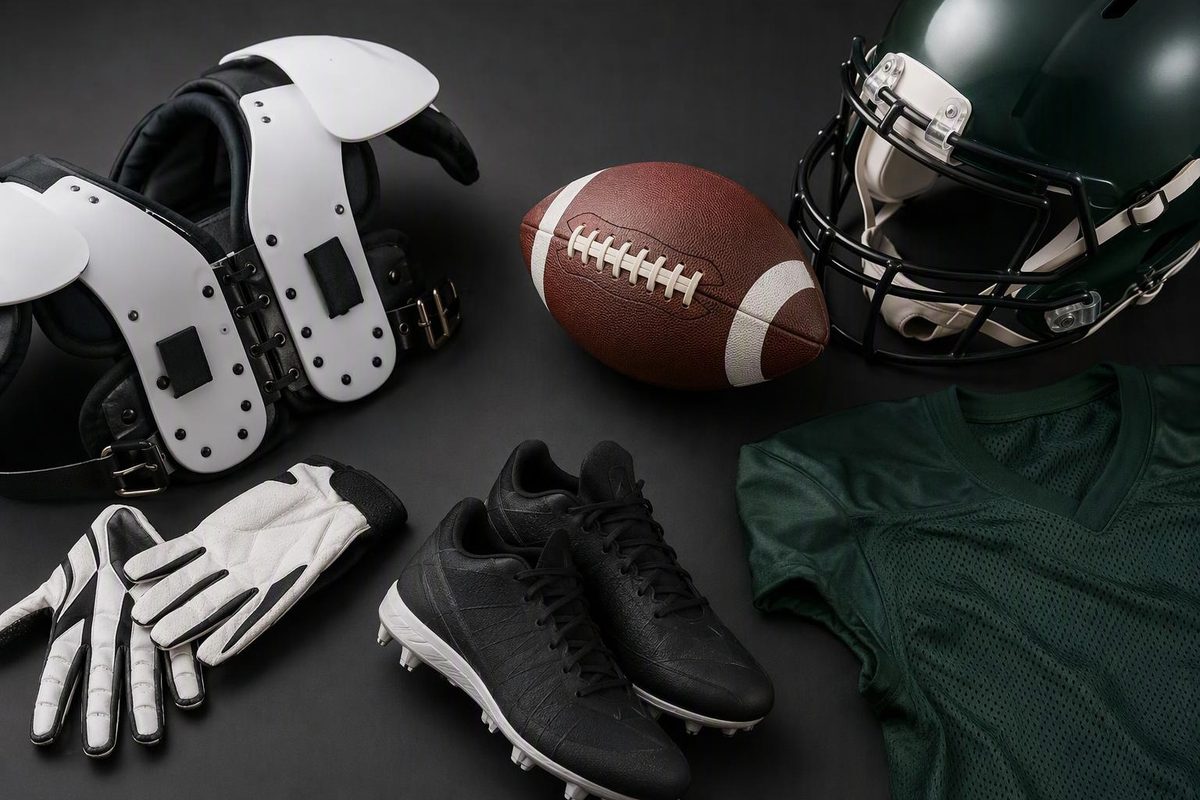
A useful goal for fall camp is to become reliable on the reps that decide playing time: align correctly, know the assignment, execute the coached technique and finish at the required tempo.
Use a daily correction loop:
- Identify what your position coach grades.
- Choose one observable correction.
- Apply it in practice.
- Verify it on film.
- Recover well enough to repeat it tomorrow.
Get a precise job description
Before or after a meeting—not while the coach is directing practice—ask two short questions:
- “What are the two biggest things keeping me from earning more reps?”
- “What does a winning rep look like at my position?”
Turn the answer into actions you can see on video. “Play harder” is too broad. “Sprint to the near hip on every pursuit rep” is gradeable. So are “split on the correct landmark,” “declare the Mike,” “keep outside leverage” and “echo the protection call before the cadence.”
Write your top two requirements on the first page of a camp notebook. Do not build a list of 12 fixes. Keep one assignment goal and one technique goal until each becomes dependable.
Win the rep before the snap
Use the same short checklist every play:
- Personnel: Who is on the field, and what is my position in this package?
- Formation or front: What picture am I seeing?
- Assignment: Which player, gap, route or space is mine?
- Adjustment: Does motion, a shift or a defensive stem change the call?
- Technique cue: What is my first step, hand placement, leverage or landmark?
A quarterback or receiver can use the sequence in How to Read a Defense Before the Snap to organize safety depth, middle-of-field structure, corner leverage and box count. The point is not to predict everything the defense will do. It is to process visible cues in the same order.
Grade five categories after practice
Do not judge practice by one catch, sack or pancake. Grade every competitive rep in five columns:
| Category | A successful rep looks like |
|---|---|
| Alignment | Correct spot before the cadence |
| Assignment | Correct player, gap, route or coverage responsibility |
| Technique | The day’s coached cue appears on film |
| Finish | Required pursuit, strain or route finish without unsafe extra contact |
| Communication | Call made early, clearly and to the right teammate |
Use + for correct, - for incorrect and ? when you cannot tell. Take each question mark to your coach rather than inventing an answer.
Eliminate assignment minuses first. A spectacular rep does not erase a bust that damages the unit. Once the mental errors decline, attack the technique mistake that appears most often.
Use a 15-minute film loop
If you have access to practice video, select four clips:
- your cleanest rep;
- your worst assignment error;
- your most common technique error;
- one rep showing your effort away from the ball.
For each clip, write picture → decision → correction.
A receiver might write: “Corner at seven yards with outside leverage → released outside anyway → if the route and our rules allow it, take the available inside release and regain the landmark.” A linebacker whose coach keys the near guard might write: “Guard blocks down → eyes stayed in the backfield → read the guard, step downhill and fit my assigned gap.”
Then rehearse the correction at walk-through speed. A receiver fixing his release can borrow one drill from this 20-minute wide receiver progression; a defensive back can select a stance or transition drill from the 30-minute DB progression. Use only coach-approved work and stop after a few clean repetitions. Camp already supplies the workload; extra fatigue is not the goal.
Make recovery part of the plan
Camp can begin in summer heat while athletes are still adapting. Heat acclimatization develops through repeated exposure, commonly over 7–14 days, rather than through one hard practice (Korey Stringer Institute). For high school players, state-association and school policies control practice duration, equipment and contact progression. NFHS guidance calls for a gradual increase in activity duration and intensity, with workouts adjusted as heat and humidity rise (NFHS heat-illness guidance). Players should follow those rules and the athletic trainer’s directions—not add work to prove toughness.
Use these habits:
- Hydrate to an individual plan. Keep fluids available and follow the athletic trainer’s instructions. Do not force excessive fluid. Both inadequate replacement and overdrinking can create health risks; body-mass change, thirst, urine frequency and urine color can help a clinician individualize the plan (NATA fluid-replacement guidance).
- Eat enough for the workload. Build regular meals around carbohydrate-rich foods, a protein source, fruit or vegetables and fluids. Football’s repeated high-intensity work relies substantially on carbohydrate, while energy needs vary by body size, position and workload (football fueling review). Ask a team dietitian or athletic trainer for individual guidance rather than copying a teammate’s diet or supplements.
- Protect sleep time. Most adolescents need roughly 8–10 hours and most adults 7–9, although needs vary. Sleep supports learning, decision-making, reaction time and recovery (U.S. Olympic & Paralympic Committee sleep guidance). Pack equipment, prepare food and put the phone away early enough to leave a realistic sleep window.
- Report problems early. Stop and tell the athletic trainer or coach about illness, heat-illness symptoms, worsening pain or possible concussion symptoms. If concussion is suspected, the CDC says the athlete must leave participation immediately, remain out that day and return only after clearance from a healthcare provider (CDC HEADS UP).
Use this daily camp routine
Before practice: Review the install, identify your alignment and assignment rules, and choose one technique cue.
During individual: Chase clean mechanics, not drill victories. Ask for one correction, repeat it and make the next rep look different.
During team: Run the pre-snap checklist, communicate and execute the call. Do not abandon the assignment to chase a highlight.
After practice: Cool down as directed, rehydrate and eat. Record your five-category grade while the details are fresh.
After film: Write one error pattern and one correction for tomorrow. If the assignment remains unclear, finish with one direct question for your position coach.
A productive camp day is measurable: fewer assignment errors, earlier communication, a visible technique correction and enough recovery to reproduce those results at the next practice.